Showing posts with label Arkansas. Show all posts

Friday, July 15, 2011

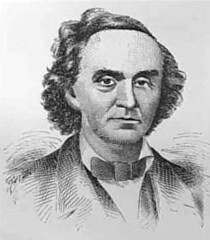
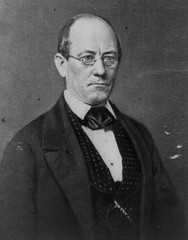
Patterson maneuvers in western Virginia

R. Patterson

Friday, June 3, 2011

Confederates surprised at Philippi, Virginia

  • CONFEDERATE MEMORIAL DAY in Tennessee, Kentucky, and Louisiana. (Jefferson Davis birthday, 1808).
  • The Democrats and the Union lose a strong supporter when Stephen F. Douglas dies unexpectedly at age 48 in Chicago, Illinois,, complications following rheumatic fever or typhoid. In Washington, President Lincoln mourns the “Little Giant” of the famous Lincoln-Douglas Debates who had defeated the President in the 1858 US Senate race in Illinois but who lost to Lincoln in the 1860 Presidential election./1861
  • Battle of Philippi, western Virginia
  • Union troops under Colonel R.F. Kelley march out of the mountains through the night in driving rain and this morning surprise Confederate forces under Colonel G.A. Porterfield, at Philippi, western Virginia, and the raw Confederates retreat rapidly under fire. The Confederate troops flee the field so quickly that the Northerners call their triumph the “Philippi Races.” Only a skirmish with about 3000 Union soldiers routing roughly 800 Confederate soldiers, no one is killed in this first land engagement of the war. It helps propel the Union commander - General George B. McClellan to fame. The Confederate defeat also has a bearing on western Virginia’s secession from the Old Dominion as the absence of Confederate troops in the area encourages pro-Union Virginians in the west to declare their support for the North./1861 
  • In Washington, Lincoln, continuing under the paranoia of an imminent invasion of the District of Columbia by the demon Southerners, writes commander of the Army Winfield Scott, "I have accounts from different sources, tending to some expectation of an attack being made upon our forces across the Potomac to-morrow morning. I think it prudent to say this to you, although it is highly probable you are better informed than I am[.]"/1861
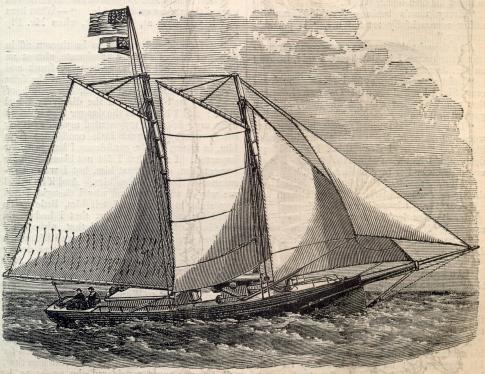
  • CSS Savannah flying both US and CS flags
  • The privateer Savannah, which left port in Charleston, South Carolina, only yesterday, overhauls the brig Joseph and sends her into Georgetown, SC. In the afternoon the brig U.S.S. Perry attacks and captures the privateer Savannah. Her cruise is ended and her crew is arrested and taken to New York./1861 
  • Confederate Secretary of War Stephen F. Mallory instructs Lieutenant John Mercer Brooke to develop an ironclad design for construction in the South./1861
  • Against its will but forced by Governor Henry M. Rector, the Arkansas Secession Convention finally adjourns, but political turmoil will continue in Confederate Arkansas. General William J. Hardee will be assigned to command Confederate forces in Arkansas, but many soldiers will not want to join the regular army and risk being moved away from their home state. A lack of organization and cohesive command will plague Arkansas for the remainder of 1861./1861

Wednesday, May 18, 2011

US Navy shells Sewall's Point, Va.; Arkansas admitted to Confederacy

Confederate batteries at Craney Island & Sewall's Point
  • In its first acknowledged offensive against the Confederacy, the Union Navy engages Confederate batteries at Sewall’s Point, Virginia, near Norfolk,opposite Federally-held Fortress Monroe. This is the second action (after Gloucester) as part of its blockade of the Chesapeake Bay. Two Union gunboats, including USS Monticello, both under command of Navy Lieutenant D.L. Braine, duel with Confederate batteries on Sewell's Point under command of Brig. Gen. Walter Gwynn and Capt. Peyton Colquitt in an attempt to enforce the blockade of Hampton Roads at the mouth of the Rappahannock River, completing the full blockade of Virginia. The two sides do each other little harm over two days of shelling. There are only ten casualties total on both sides. /1861

  • Confederate Congress in Montgomery, Alabama, votes to admit Arkansas to the Confederate States of America./1861
    • Francis Blair, Jr.
      In another administrative bungling act, President Lincoln had made matters at the Federal Arsenal at St. Louis, Missouri, even more confusing. The military chief there, Gen. William S. Harney, had been relieved of command on April 21, then reappointed May 8. Next Lincoln had sent a letter to local Unconditional Union Republican politician Francis Blair, Jr., giving him authority at his discretion to recommend to Lincoln whether to relieve Harney again because the general was suspected of tolerating Confederate elements. Today Lincoln sends Blair (brother of Postmaster General Montgomery Blair and brother-in-law of Gustavus V. Fox) yet another letter, rescinding his first one./1861

    Wednesday, May 11, 2011

    Richmond the new capital, St. Louis Riots continue

    St. Louis riots continue a 2nd day
    • Confederate Congress votes by States 5 to 3 to move the capital to Richmond, Virginia. The three against are Florida, South Carolina, and Alabama/1861 
    • In Wheeling, western Virginia, and San Francisco, California, pro-Union demonstrations are held though strong secessionist sympathies are also found in the Bay Area./1861
    • (Brig. Gen. Nathaniel Lyon)Image via Wikipedia
      US Capt N. Lyon
    • In St. Louis, Missouri, the disturbance and deaths which US Captain Nathaniel Lyon caused yesterday continues overnight. The city’s mayor, trying to calm the city, orders all saloons closed. Today shots are fired at the German Volunteers at the intersection of 5th and Walnut streets and once again they return fire into the mob. Capt. Nathaniel Lyon sends in the US 5th Reserve Regiment to handle the still-angry crowd of St. Louis civilians, and the regiment again fires on the citizens, killing six or seven. Eventually, Lyon restores Federal control by implementing martial law, and the outgunned secessionists slowly back down. Later in the evening, US General William S. Harney, Capt. Lyon’s commanding officer, returns to St. Louis and is most unhappy at Lyon’s provocation of the now hostile city. In reaction, the Missouri General Assembly approves the previously stalled “Military Bill,” putting Missouri on a war footing, granting
      Claiborne Fox JacksonImage via Wikipedia
      Gov. C.F. Jackson
      Governor Claiborne Jackson wide executive powers, and creating a new Missouri State Guard to resist the Union invasion with Sterling Price as its Major General. Unionists call it a "secession act in all but name."/1861
    • The US Navy begins the blockade of Charleston, South Carolina, with the arrival of the steamer Niagara./1861
    •  In Little Rock, Arkansas, a political clash between Governor Henry Rector and the Arkansas Secession Convention erupts regarding who holds authority in the now seceded state. The convention creates a military board to command the state’s armed forces, but many members of the militia refuse to follow the board’s orders./1861

    Friday, May 6, 2011

    Tennessee, Arkansas both secede

    Tennessee Secession flag 1861-1863
    Arkansas secession cartoon
    • In Nashville, the Tennessee legislature votes to put the question of secession before the people in a popular referendum on June 8. In the meantime, the state legislature votes 66-25 in favor of a “Declaration of Independence and Ordinance dissolving the federal relations between the State of Tennessee and the United States of America, thus becoming the ninth state to resume her full sovereignty and cast her lot with the Confederate States. The vote went along geographic lines. Secessionist Middle and West Tennessee outvotes Unionist East Tennessee./1861 
    • In Little Rock, Arkansas, David Walker, chairman of the Arkansas Secession Convention, reconvenes the body and in light of Virginia’s secession and Lincoln’s demand for troops, the convention votes 69-1 to approve an ordinance of secession from the Union and join the Confederacy, the tenth state to do so. The lone dissenting vote is cast by Isaac Murphy, who would later serve as Arkansas’s first governor during Reconstruction./1861  
    • A Unionist rally is held in Fairmont, western Virginia./1861
    • In Montgomery, Alabama, President Jefferson Davis gives approval to the Confederate Congressional bill declaring a state of war between the United States and the Confederate States./1861
    • The New Orleans Bee reports that people holding US postage stamps must use them by June 1, 1861./1861

    Saturday, April 23, 2011

    Lee to command Virginia militia

    Maj Gen RE Lee, Virginia Militia
    • Nominated by Governor Letcher of Virginia and approved by the Assembly yesterday, Robert E. Lee assumes command of Virginia's militia and naval force, commissioned major general of Virginia forces--the highest rank of the Virginia Militia. Meanwhile, the Virginia secession convention ratifies a temporary union with the Confederacy and ratifies the Confederate Constitution, subject to approval by a May 23rd public referendum of the Virginia Ordinance of Secession./1861 
    • Arkansas State Militia, sent by Governor Henry M. Rector, arrives in Fort Smith, Arkansas, to seize the U.S. army post there, but find that U.S. troops have already abandoned it./1861
    • President Jefferson Davis urges Missouri Governor Claiborne Jackson to seize the Federal arsenal at St. Louis, one of the largest west of the Appalachian Mountains, then join the Confederacy./1861
    • George McClellan is appointed Major General of the Ohio militia./1861
    • At San Antonio, Texas, Confederate forces under Colonel Earl Van Dorn arrest the officers of the 8th United States Infantry as prisoners of war while Confederates commanded by James Duff capture a company of 8th US Infantry formerly commanded by US Colonel Robert E. Lee near San Antonio./1861

    Friday, April 22, 2011

    Lincoln: "What is to become of the revenue?"

    Governor Hicks, though himself a slaveholder, ...Image via Wikipedia
    Gov. T.H. Hicks
    • Maryland Governor Thomas Holliday Hicks calls a session of the Maryland legislature to consider secession. Unrest in Baltimore continues to threaten the security of the District of Columbia as troops go through Maryland on their way to Washington. President Jefferson Davis, communicating with Virginia Governor John Letcher, indicates his hope that he will be able to “sustain Baltimore if possible.”/1861
    • Pres. Lincoln
      President Lincoln meets at the White House with a distinguished delegation of the Young Men’s Christian Association (YMCA) of Baltimore led by Rev. Dr. Fuller of the Baptist Church of Baltimore. According to the Baltimore Sun, Fuller endeavors to impress on the President his unique responsibility and privilege to foment fratricidal war or a lasting peace. Lincoln asks, “But what am I to do?” Fuller urges him to recognize that the Southern States have formed a government of their own and they will not come back. Without referring to the constitutionality of secession, Fuller suggests he can simply recognize the Confederacy and both North and South can be relieved of their great anxieties and move forward in pursuit of peace. Lincoln responds, “And what is to become of the revenue? I will have no government, no resources,” reflecting the underlying reason for Lincoln’s great vision for preserving the Union – the fact that the Southern States provided a majority of Federal government revenue. As the conversation turns to the offense of troops coming through Baltimore to “subdue the South,” Lincoln insists that he has called the troops only for defense of the Capitol, not for invasion of the Southern States. “And,” Lincoln says, “I must have the troops, and mathematically, the necessity exists that they should come through Maryland. They can’t crawl under the earth, and they can’t fly over it, and mathematically they must come across it. Why sir, those Carolinians are now crossing Virginia to come here and hang me, and what can I do?” Despite Fuller’s pleading for a peaceful course, Lincoln remarked that there “would be no Washington in that, no Jackson in that, no spunk in that!” Dr. Fuller hoped that Lincoln would not allow spunk to override patriotism, but Lincoln said there was no way that he or Congress would recognize the Southern Confederacy. After the YMCA delegation departs the White House, they “agreed on the hopelessness of their errand and the sad prospect that any good thing from such a source, and the exclamation was actually made, ‘God have mercy on us, when the Government is placed in the hands of a man like this!”/1861
    • Following the destruction of the Norfolk Navy Yard, the Washington Navy Yard has become indispensible. But there are personnel problems. Today Commandant Capt. Franklin Buchanan resigns to serve with the South. The Chief of Navy Ordnance, George Magruder, flees to Canada for the duration of the war, and the entire yard has dwindled to 150 men./1861
    • The Clarksburg (present-day West Virginia) Convention calls for an anti-secessionist convention to be held in May, 1861./1861
    • Illinois state militia garrisons Cairo, Illinois, on the Mississippi River./1861
    • Arkansas Governor Henry M. Rector refuses to send troops to support Lincoln’s quota to suppress secession, stating, “the people of this commonwealth are freemen, not slaves, and will defend to the extremity their honor, lives, against Northern mendacity and usurpation.”/1861
    • North Carolina state militia assumes control of the Federal arsenal at Fayetteville, North Carolina./1861

    Monday, April 18, 2011

    Lee offered US Army command, VA militia takes Harper's Ferry

    Col. Robert E. Lee, USA, 1861
    • Major Robert Anderson and his Fort Sumter garrison arrives in New York to a hero’s welcome while President Lincoln in Washington listens to an eyewitness account from Mr. Wiley of New York of what he saw in Charleston Friday night, April 12, 1861, during the battle of Fort Sumter. Lincoln then retires early but upon being awakened by John Hay, his assistant secretary, to inform him of a possible plot against his life, Lincoln grins./1861
    • F.B. Blair, Sr., presents orders to Colonel Robert Edward Lee, USA, from General of the Army, Winfield Scott. On personal orders from President Lincoln, Scott offers command of the entire US Army to Colonel Robert E. Lee to coerce the South, and a terrible dilemma confronts Lee: Fame or Service to his State. /1861
    • Virginia militia under command of Brig. Gen. William H. Harman chases out of Harper's Ferry, Virginia, the Union garrison under command of Lieutenant Jones who destroys as much as possible beforehand to prevent its falling into the possession of the Confederate or Virginia governments./1861 
    • Colonel Cake with 400 men, four companies, of the Twenty-fifth Pennsylvania Volunteers arrives in Washington, D. C., the first volunteer troops to enter the city for its defense. On the way, the companies must change trains in Baltimore, Maryland, and march through the city where pro-secession flags fly from buildings on Federal hill. Southern sympathizers cat call, sneer, and make rude remarks. But the tension in Baltimore is decidedly rising./1861
    • Claiborne Fox JacksonImage by Allen Gathman via Flickr
      Missouri Gov. C.F. Jackson
    • Governor Claiborne F. Jackson, of Missouri, in rejecting President Lincoln’s demand for a state quota of troops to fight the seceded states, declares the requisition is “illegal, unconstitutional, revolutionary, inhuman, diabolical and cannot be complied with.”/1861
    • Georgia Governor Joseph E. Brown, in response to the Federal call for troops, calls on all Georgia men to volunteer for military service with this statement, “Let us all, with one accord, prepare to welcome the invaders with "bloody hands to hospitable graves." We have to deal with an enemy wily and treacherous, base, malignant and full of hate. It is impossible to know what are the full designs of Lincoln and his black band. Of one thing we may be assured: they will strike any and all the harm they have the power to do. Therefore we can lose nothing by being fully and thoroughly prepared at every point, and for any emergency. Now we recommend that every man capable of bearing arms, regardless of age, and every boy sixteen years old and upwards, begin immediately to train and drill. ..../1861
    • Arkansas troops seize U.S. stores at Napoleon, Arkansas./1861

    Saturday, April 16, 2011

    KY Gov: "No troops for wicked purpose"

    KY Gov. Magoffin
      • The governor of Kentucky refuses to furnish troops under President Lincoln's proclamation. Kentucky Governor Beriah Magoffin declares that "Kentucky will furnish no troops for the wicked purpose of subduing her sister States." In Arkansas, Governor Henry Rector rejects Lincoln’s demand for troops as well, and asks the chairman of the state secession convention to reconvene the convention./1861
      • John LetcherImage by Allen Gathman via Flickr
        VA Gov. Letcher
        ·         In Richmond, Virginia Governor John Letcher, like North Carolina Governor John Ellis, at first was so aghast at Lincoln’s immediate demand for a quota of 2,340 Virginia militiamen to put down a Lincoln-declared insurrection in the seceded states, that he doubted the communication’s authenticity. Letcher replies to the President that “the militia of Virginia will not be furnished to the powers at Washington for any such use or purpose as they have in view,” saying Virginia would have no part in Lincoln’s ambition to “subjugate the Southern States. ” Letcher concluded, “You have chosen to inaugurate civil war, and having done so, we will meet it in a spirit as determined as the Administration has exhibited toward the South.”/1861
      • President Jefferson Davis and the Confederate government call for 32,000 volunteers./1861
      • Despite heavy weather and stopping to help secure Union fortifications at Key West, Florida, the Atlantic, with Colonel Harvey Brown and Captain Montgomery C. Meigs aboard, arrives off Fort Pickens at Pensacola Bay, Florida, in the evening./1861

      Sunday, March 20, 2011

      Missouri supports Crittenden Compromise; Arkansas to have referendum

      St. Louis, Missouri, in 1861
      • In St. Louis, the Missouri Secession Convention approves a resolution 90-4 supporting the Crittenden Compromise. "Resolved, That the people of this State deem the amendments to the Constitution of the United States, proposed by the Hon. John J. Crittenden of Kentucky, which the extension of the same to the territory hereafter to be acquired by treaty or otherwise, a basis of adjustment which will successfully remove the causes of difference forever from the arena of national politics." By a vote of 57-36 the Convention also adopted an amendment asking the Federal Government and the seceding states to refrain from any act which would lead to civil war and asking the Lincoln Administration to withdraw from all fortifications in the seceded states. /1861
      • The Arkansas Secession Convention adopts a resolution providing for a statewide public referendum on August 5, 1861, on the question “cooperation” or “secession.”/1861
      • Georgia’s Secession Convention transfers all military installations and operations to control of the Confederate States military./1861
      • US Army troops abandon Brown and Duncan, Texas./1861

      Friday, March 18, 2011

      Arkansas votes against secession

      • In Arkansas, a state convention called to consider secession votes down the proposal 39-35, but instead agrees to a public referendum in August on the secession question./1861
      • While hoping that the Lincoln Administration would peacefully withdraw Major Robert Anderson and his garrison from Fort Sumter and negotiate a financial settlement to compensate the United States for the property, President Jefferson Davis is skeptical. In a communiqué concerning the fortification of Charleston Harbor, Davis tells South Carolina Governor Francis Pickens that it is unlikely “the enemy would retire peacefully from your harbor.”/1861

      Saturday, February 12, 2011

      Lincoln goes on damage control


      • On his trip to Washington, President-elect Lincoln makes numerous stops along the way, but in an effort to tone down his remarks yesterday in Indianapolis about the preservation of the Union which angered Upper South and other conservative Democrats, he goes out of his way to avoid expressing his real opinions, asking citizens in Cincinnati to be loyal to the Constitution, and even stating to several thousand of the German Industrial Association in Cincinnati that he will not reveal what he plans to do with the national crisis as President. "I deem it my duty that I should wait until the last moment, for a development of the present national difficulties, before I express myself decidedly what course I shall pursue.”/1861
      • Jefferson Davis, President-elect of the Confederacy, also makes whistle stops on his way to Montgomery, Alabama, at one stop admitting that secession could eventuate in war./1861
      • The Arkansas State Militia seizes the US Arsenal at Napoleon, Arkansas/1861
      • Louisiana adopts its own state flag. Louisiana's Governor Thomas O. Moore obtains control of Federal property in the State with the help of the Legislature./1861